(JRN504) What's In My Camera Bag?

Updated: Dec 8, 2020
Over the past five years, my photography equipment has changed. I started out with a classic kit that was passed down to me from my sister. It did the job, but it was by no means something that I could use in the long run. Last summer, I took a trip to B&H Photo Video in New York City and traded in all my equipment. That credit--plus some other money I saved up and help from my dad-- helped me upgrade to everything I use today.

To start, I've been using this Ruggard LYNX 75 backpack for over a year now. When I first started shooting, I had a standard over the shoulder bag that fit one lens and one camera. Since I have purchased more equipment and taken photography more seriously, I upgraded to the Ruggard. It fits all my equipment, the straps are comfortable to wear for long periods of time and it comes with a rain cover.

I have two cameras, this one being the Canon EOS 7D. I purchased it from someone off Facebook marketplace during my sophomore year of college. I needed a more professional camera since I started working in the athletic department and this was a fast, easy way to get a good camera for a cheaper price. It's definitely gotten a little worn out over the years but it still works great and is my backup to the new 7D Mark II.

This 7D Mark II was a B&H purchase. I had a few options to choose from, but since it was similar to the one I already had and it was the least expensive, I went with it. I definitely think a more expensive camera would produce better quality photos, but for the time being, I want cameras that both function, last long and don't hurt my bank account too much.
I do have to pay for grad school, after all.

I've had this lens since I first started shooting. It's 18-55mm and it came in the starter kit my sister gave me when I was a senior in high school. It is not the best lens for sports photography or any photography for that matter, but I can't bring myself to get rid of it yet since it still works and I don't need to use small lenses very often.

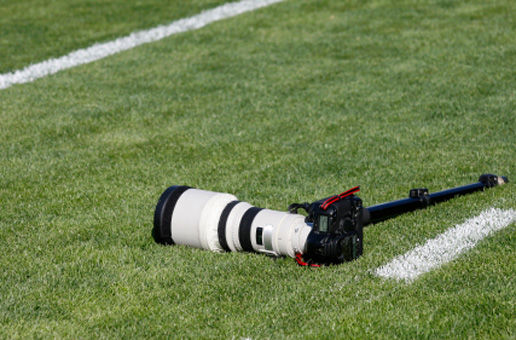
This is my favorite lens and one I would recommend to anyone doing sports photography. It's 70-200mm and gives you exactly what you need for almost every sport. From behind the glass at a hockey game to the sidelines of the soccer field, it has a close enough range that you can get everything right in front of you but also zoom far enough to be across the field, ice or court. It has an attachment that I can screw into a monopod or tri-pod to either get more steady shots or just have some of the weight taken off my arms.

As great as my 70-200mm lens is, I needed a little bit more when I was working with the Brooklyn Cyclones. Unlike college, you don't have as much free-range in terms of how close you can get to the action and where you can stand. SHooting from the dugout didn't give me a great distance to the outfielders, so this extender did the job. It brought me a little closer to the farthest parts of sports without making the photos blurry, grainy or too light/dark.

As a college student, I'm definitely on a budget. So when I already purchased all this expensive, professional equipment, I decided I could handle using a cheap Amazon monopod. It functions exactly how I need it to and it's a subtle reminder that you don't always need high tech equipment to be able to do your job.
I'm looking forward to the day that I can afford more advanced cameras, lenses and monopods to really elevate my photography. But for now, this is the perfect set for where I'm at right now. Besides, it's not the equipment that makes you a photographer.
It's you.


Comments